
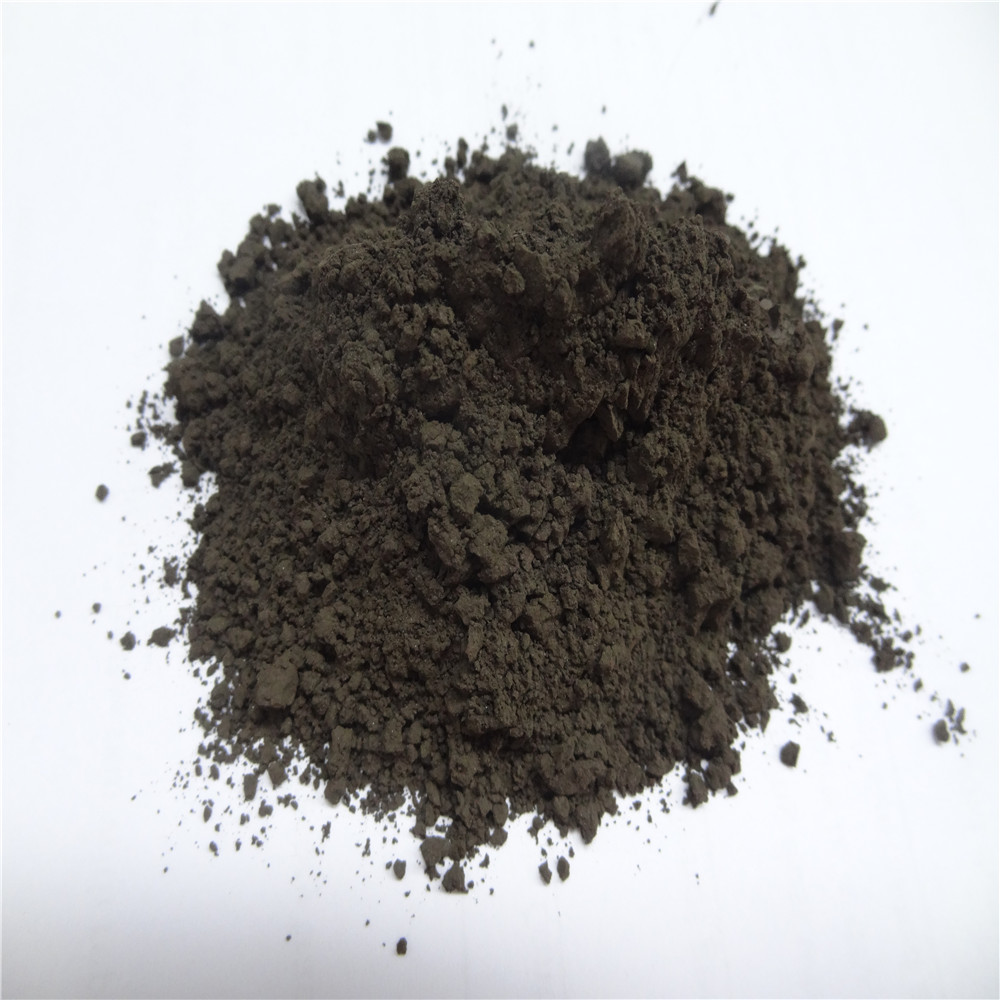
The application of 325-mesh chromite flour is highly specialized, leveraging its unique physical and chemical properties. “325-mesh” refers to a fine particle size where about 97-99% of the powder passes through a 325-mesh screen (approximately 44 microns). This fineness is critical for its applications.
Primary Application: Foundry (Sand Casting) Industry
In foundry, chromite sand (and flour) is prized for its high thermal conductivity, chilling power, and chemical neutrality. The 325-mesh flour form is used in specific, value-added ways:
Mold and Core Coatings (Refractory Wash/Zircon Substitute):
Purpose: A slurry or “paint” is applied to the surface of sand molds and cores before metal pouring.
Function: Creates an ultra-smooth, high-refractoriness barrier between the molten metal (especially steel and high-alloy iron) and the molding sand (often silica).
Benefits of 325 Mesh:
Smooth Finish: The fine particle size allows for a thin, even coating that replicates the mold surface perfectly, resulting in superior casting surface finish with reduced “metal penetration” defects.
Thermal Protection: Acts as a highly effective thermal barrier, preventing the sand from fusing to the casting (“burn-on”).
Chemical Inertness: Does not react with molten steel, reducing slag formation and cleaning costs.
Facing Material (Paste or Segregation Method):
Purpose: A paste made of chromite flour and a binder is troweled onto the pattern or into the mold in critical areas.
Function: Provides localized, extreme chilling and resistance to metal penetration in sections of the mold that will experience the highest thermal shock (e.g., gates, runners, heavy sections).
Specialty Additive to Molding Sand:
Purpose: Added in small percentages (2-10%) to silica or olivine sand mixes.
Function: Increases the overall refractoriness and thermal conductivity of the sand system, reducing expansion defects (like veining and scabbing) and improving cooling rates for better metallurgical properties.
Secondary Application: Refractory Industry
Chromite flour is a key raw material in the production of shaped and monolithic (un-shaped) refractories.
Brick Manufacturing (Magnesia-Chrome & Chrome-Magnesia Bricks):
Purpose: Used as a fine component in the brick batch mix.
Function: The fine chromite grains help to densify the brick structure during pressing and firing, improving hot strength and slag resistance. It facilitates the formation of a direct bond between periclase (MgO) grains.
Gunning and Ramming Mixes:
Purpose: Used in dry or moistened mixes for patching and lining furnaces (e.g., in ladles, AOD/VOD vessels).
Function: The fine flour component ensures a cohesive, workable mix that can be applied to form a dense, erosion-resistant lining.
Mortars and Jointing Compounds:
Purpose: Used for laying and bonding refractory bricks in high-temperature zones (e.g., steel ladles, cement kilns).
Function: Provides a refractory joint that matches the chemical and thermal expansion properties of the chrome-containing bricks, ensuring a tight seal.
| PHYSICAL PROPERTIES(TYPICAL) | AVERAGE CHEMICAL COMPOSITION(TYPICAL) | ||
| PH | 7-9 | Cr2O3 | ≥46.0% |
| Color | Black | SiO2 | ≤1.0% |
| Acid Amount | ≤2m | Fe2O3 | ≤26.5% |
| Soil% | ≤0.1 | CaO | ≤0.30% |
| Bulk Density | 2.5-3.0g/cm3 | MgO | ≤10.0% |
| Specific Gravity | 4.0-4.8g/cm3 | Al2O3 | ≤15.5% |
| Moisture | ≤0.1% | P | ≤0.003% |
| Sintered temperature | ≥1800℃ | S | ≤0.003% |
| Free Acid | 0 | Cr/Fe | 1.55:1 |
| Filling density | 2.6g/cm3 | ||
| Melting temperature | ≥2180℃ | ||
Key Properties That Drive These Applications
High Melting Point: ~2,180°C (3,956°F).
High Thermal Conductivity: Chills metal rapidly.
Neutral Chemical Behavior: Resists attack by both acidic and basic slags.
Low Thermal Expansion: Provides dimensional stability, reducing casting defects.
High Density: ~4.5 g/cm³, contributing to its chilling power.
Fineness (325 Mesh): Enables smooth coatings, good mixability, and dense packing.