
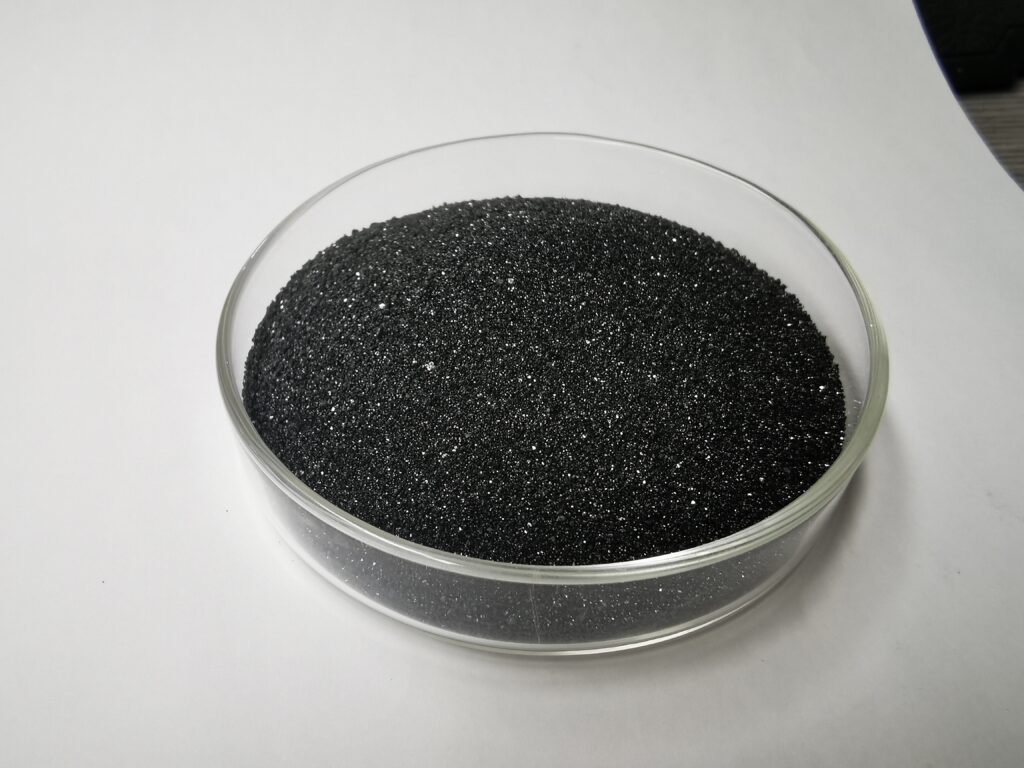
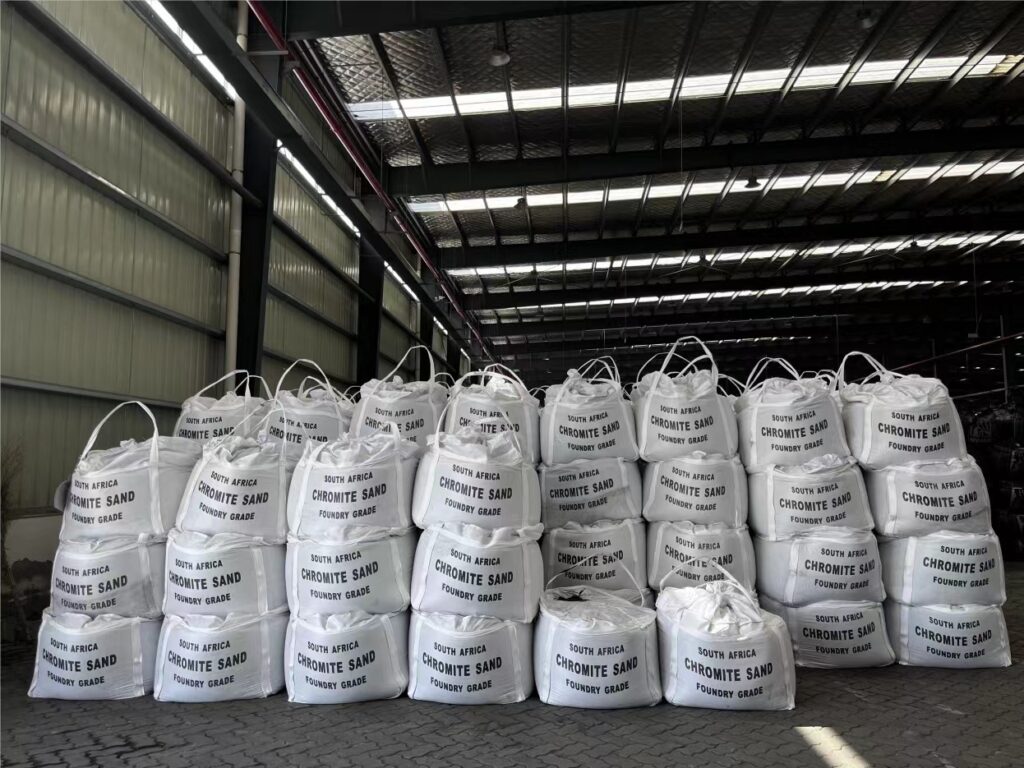
Chromite sand (FeCr₂O₄) is a high‑performance specialty foundry sand, widely used for molds/cores in steel, iron, and high‑alloy casting, valued for high refractoriness, low expansion, high thermal conductivity, and excellent anti‑penetration.
1. Chemical Composition (Foundry Grade)
| Item | Standard Requirement | Remarks |
|---|---|---|
| Cr₂O₃ (Chromium Oxide) | ≥45% (Premium ≥46–50%) | Core index; higher = better refractoriness |
| SiO₂ (Silica) | ≤1.0% | Low silica prevents veining/expansion defects |
| FeO (Iron Oxide) | ≤26.5% | Affects Cr/Fe ratio |
| Al₂O₃ (Alumina) | ≤15.5% | Improves high‑temp stability |
| MgO (Magnesia) | ≤10% | Controls sintering behavior |
| CaO (Calcia) | ≤0.3% | Minimizes slagging |
| P (Phosphorus) | ≤30 ppm (0.003%) | Avoids casting brittleness |
| S (Sulfur) | ≤30 ppm (0.003%) | Prevents hot cracking |
| Cr/Fe Ratio | ≥1.55:1 | Critical for foundry performance |
| pH | 7–8.5 | Neutral; no reaction with molten metal |
2. Physical & Thermal Properties
| Property | Typical Value | |
|---|---|---|
| Crystal Structure | Spinel (FeCr₂O₄) | |
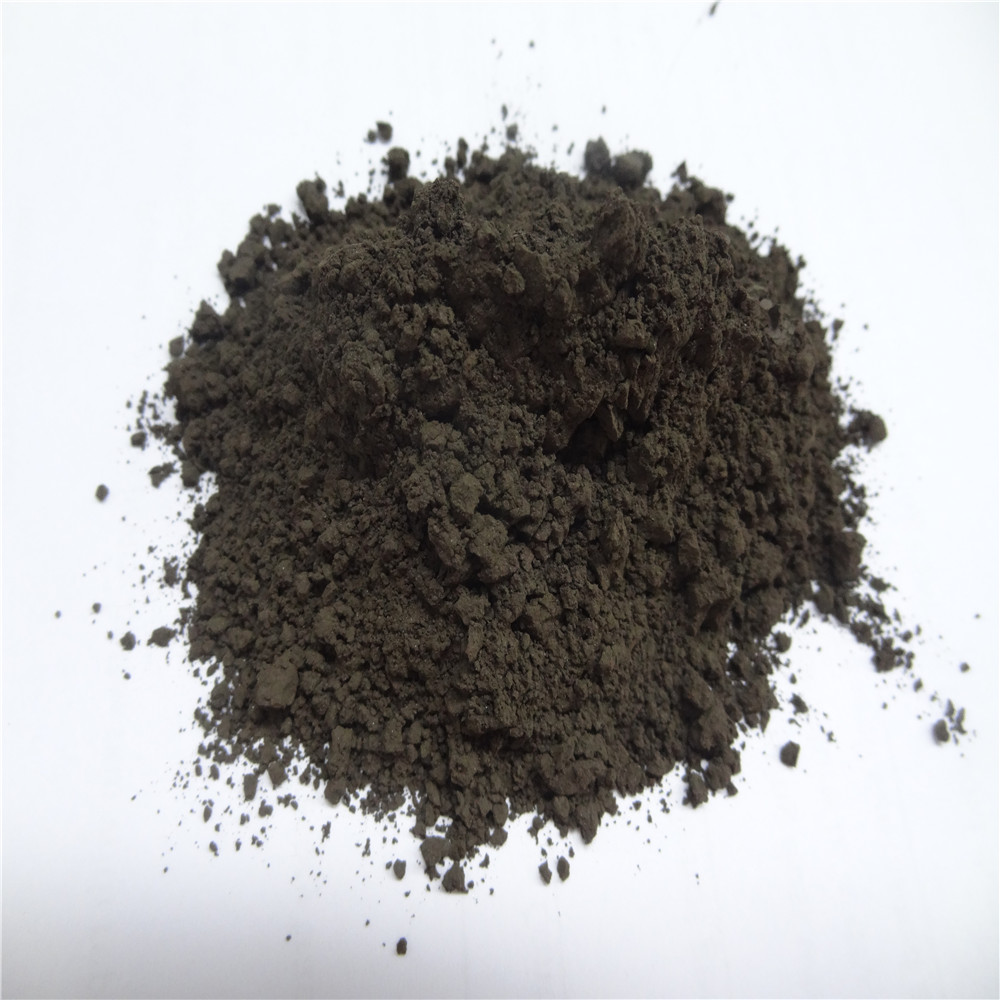
| Color | Brownish‑black to black | |
| Mohs Hardness | 5.5–6 | |
| True Density | 4.0–4.8 g/cm³ | |
| Bulk Density | ~2.5–2.8 g/cm³ (≈160 lb/ft³) | |
| Melting Point | ~2180°C | |
| Refractoriness | >1800°C | |
| Sintering Temperature | >1800°C | |
| Thermal Conductivity | 2–3× silica sand | Fast cooling, promotes directional solidification |
| Linear Thermal Expansion | Very low | Minimizes veining & distortion |
| Moisture | ≤0.1% | For resin‑bonded systems |
3. Grain Size (AFS Grade)
Common foundry grades: AFS 20–25, 25–30, 30–35, 40–45, 45–50, 45-55,50–60
- Narrow particle distribution for good flow & compaction
- Coarser grades (AFS 20–35): lost‑foam, heavy section castings
- Finer grades (AFS 40–60): precision cores & face sand
4. Key Advantages in Casting
- High refractoriness: withstands 1600°C+ pouring temps for steel & high alloys
- Low thermal expansion: eliminates veining, improves dimensional accuracy
- High thermal conductivity: acts as internal chill; reduces shrinkage & hot tearing
- Anti‑penetration: solid‑state sintering forms dense barrier; prevents burn‑on
- Chemical inertness: resists alkaline slag; no reaction with Fe/Cr/Mn alloys
- Reusable: regenerable for multiple cycles
5. Typical Applications
- Large/heavy steel castings: hydro turbines, power generation, pressure vessels
- High‑Mn / high‑Cr steel: wear‑resistant parts (e.g., crusher teeth)
- Precision cores: engine blocks, valves, impellers
- Face sand: replaces silica in critical zones to avoid defects
- Lost‑foam / shell molding: complex, smooth‑surface castings