
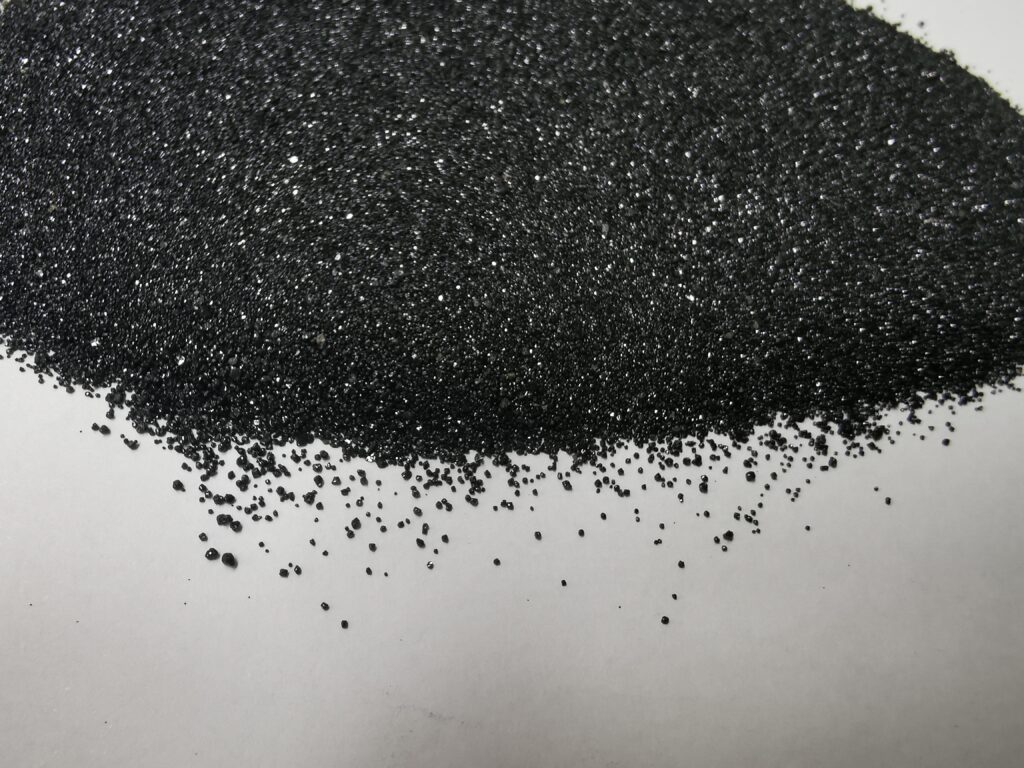
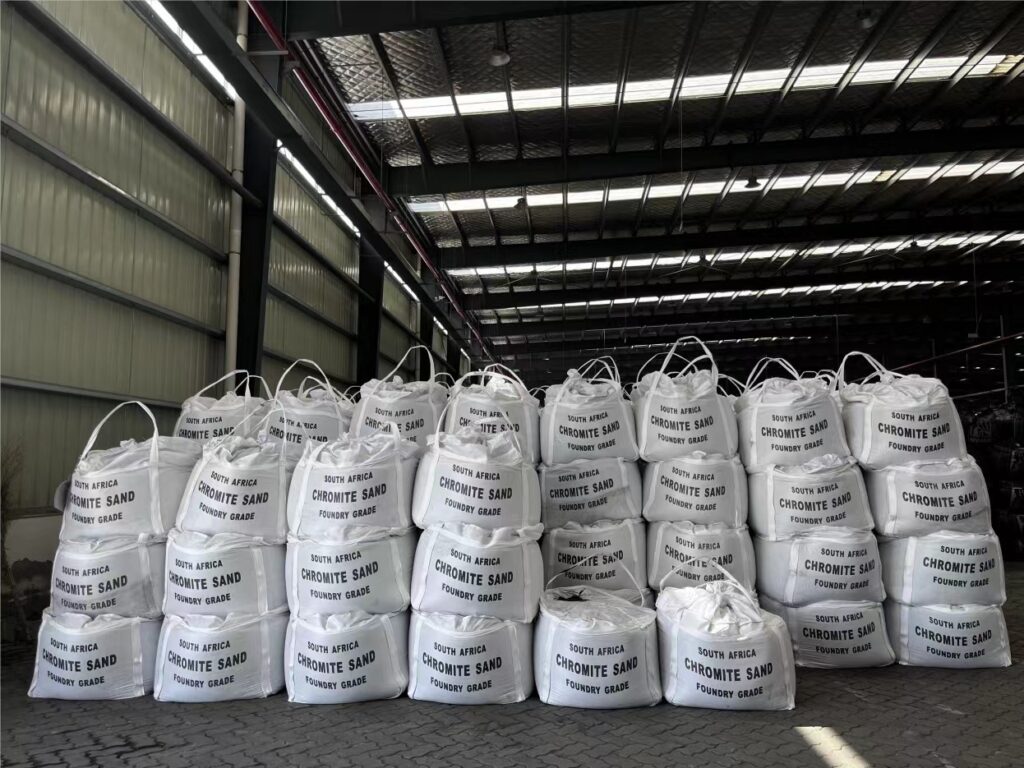
Chromite sand originating from South Africa is a benchmark product in the global foundry industry.
Chromite Sand is a naturally occurring spinel consisting primarily of the oxides of chrome and iron. It is a by-product of ferro-chrome production and is mainly used in foundry applications and in glass production.
TYPICAL CHEMICAL ANALISIS [%]:
| Cr2O3 | SiO2 | FeO | CaO | MgO | Al2O3 | P | S | Cr/Fe |
| ≥46.0% | ≤1.0% | ≤28.5% | ≤0.3% | ≤9.8% | ≤15.5% | 0.003% | 0.003% | 1.6 : 1 |
PHYSICAL PROPERTIES
| LOI | Water | Dust | Melting point | PH Value |
| ≤0.5% | ≤0.2% | <0.5% | 2150℃ | 7-9 |
AVAILABLE SIZES
AFS25-35,AFS30-35,AFS35-40 AFS40-45 , AFS45-50 AFS45-55 AFS50-55 AFS55-60 AFS60-65 200#-0 325# 400#-0
Advantages of South Africa Chromite Sand
Abundant & Stable Supply: South Africa holds the world’s largest reserves of chromite ore (within the Bushveld Igneous Complex). This makes SA-origin sand the most widely available and supply-secure option globally, forming the bulk of the market.
Chemical Composition:
Cr₂O₃ Content: Typically ranges from 44% to 47% for foundry-grade sand. This provides excellent refractoriness for most steel and iron casting applications.
Cr:Fe Ratio: Generally between 1.5:1 to 2.2:1. This is considered a solid, commercial-grade ratio that offers good resistance to slag attack and metal penetration for the majority of casting needs.
Low Silica (SiO₂): Usually controlled below 1.5% – 3%, minimizing the risk of low-temperature slag formation and sand fusion.
Superior Thermal Properties:
High Thermal Conductivity: Promotes rapid solidification, refines grain structure, and reduces porosity.
Low Thermal Expansion: Virtually negligible expansion minimizes veining, burn-on, and fin defects in castings.
High Heat Capacity (Chill Effect): Acts as an excellent chill sand, ideal for thick sections and differential cooling.