
Foundry Grade Chromite Sand (46% Cr₂O₃ Minimum)
1. Core Definition
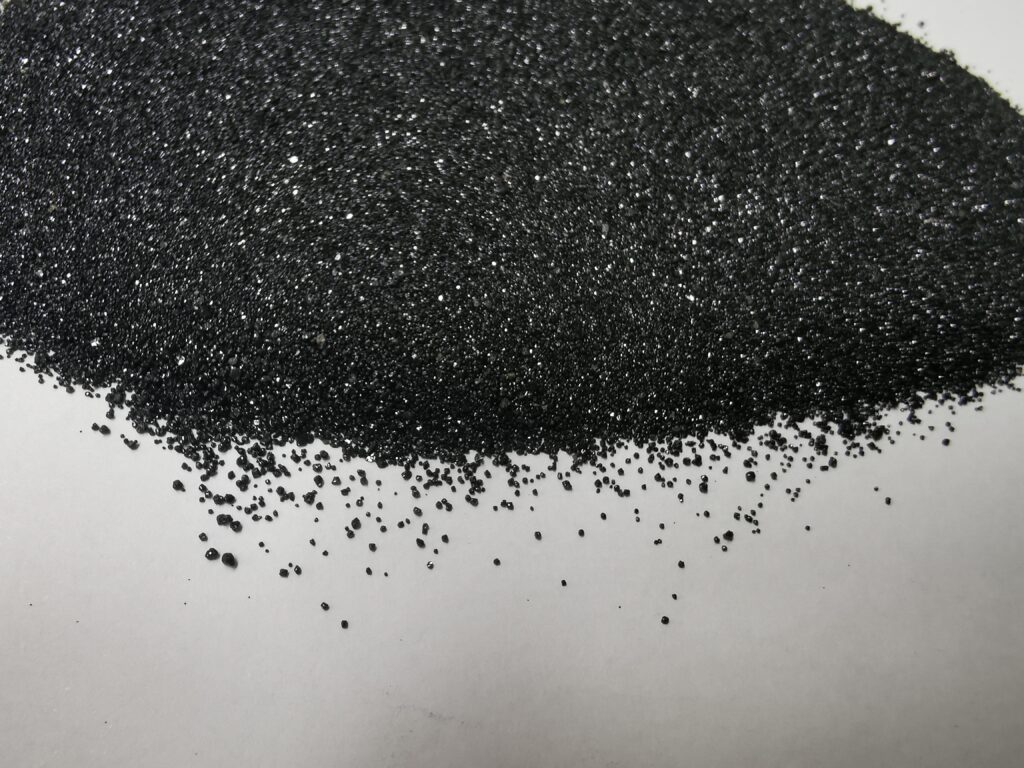
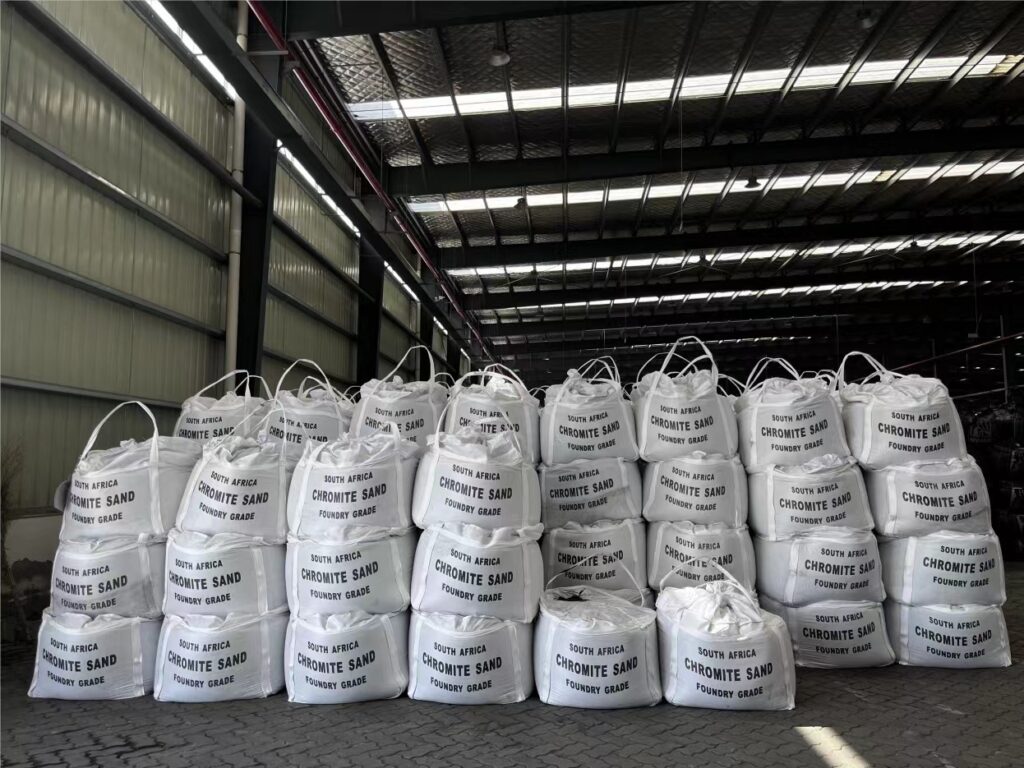
Foundry Grade Chromite Sand is a high-purity, uniformly graded refractory aggregate specifically processed for demanding metal casting applications. It is derived from natural chromite ore (FeCr₂O₄) through a series of steps including crushing, grinding, sizing, beneficiation, and often high-temperature calcination.
| Item | Unit | Index(%) |
| Cr2O3 | % | 46.0min |
| SiO2 | % | 1.0max |
| FeO | % | 26.5max |
| CaO | % | 0.30max |
| MgO | % | 10.0max |
| Al2O3 | % | 15.5max |
| P | % | 0.003max |
| S | % | 0.003max |
| Cr/Fe | / | 1.55:1 |
| Bulk Density | g/cm3 | 2.5-3 |
| Color | / | Black |
| PH | / | 7-9 |
| The amount of the acid | / | 2ML(MAX) |
| Percent Soil | % | 0.1max |
| Percent Moisture | % | 0.1max |
| The Sintered | 1600 | |
| Percentage of Free Acid Present in the Sand | % | 0 |
| Filling Density | g/cm3 | 2.6 |
| Sintering Point | 1800min | |
| Melting Temperature | 2180 |
Primary Chemical Composition:
Chromium Oxide (Cr₂O₃): The defining component. A minimum content of 46% is the standard benchmark for high-quality foundry-grade material. Higher Cr₂O₃ content directly correlates with better refractoriness and chemical stability.
Iron Oxide (FeO, Fe₂O₃): Typically ranges from 20-30%. It contributes to the sand’s high thermal conductivity.
Silica (SiO₂): A key impurity to control. In premium grades, it is kept very low (often <1% to 3%). High SiO₂ reduces refractoriness and can promote silicate slag formation.
Alumina (Al₂O₃): Usually present at 12-20%.
Magnesia (MgO): Present at 8-12%, enhancing slag resistance.
Key Physical Property: Its basic/neutral chemical character, which makes it highly resistant to reaction with acidic (SiO₂-based) or basic (MgO-based) slags and molten metals, particularly ferrous alloys.
2. Advantages of Foundry Grade Chromite Sand
Chromite sand offers a unique combination of properties that solve specific problems in casting, justifying its higher cost compared to silica sand.
Exceptional Refractoriness: Very high melting point (~2150°C). It resists sintering and fusion when in contact with molten steel and high-alloy irons, preventing burn-on defects.
High Thermal Conductivity: Conducts heat away from the casting interface 3-4 times faster than silica sand. This promotes rapid solidification, leading to:
Finer grain structure and improved mechanical properties in the casting.
Reduced penetration of molten metal into sand pores.
Low Thermal Expansion: Exhibits virtually no phase transformations upon heating, resulting in near-zero linear expansion. This eliminates veining and expansion defects common with silica sand.
Excellent Purity & Chemical Inertness: Its basic nature prevents reactive slag formation with Mn and Fe oxides in steel, minimizing metal-sand reactions and improving surface finish.
High Density (~4.6 g/cm³): Provides good compaction and mold stability, resisting metalostatic pressure.
3. Applications in Foundries
It is a premium material used strategically where its benefits are critical.
Cores & Molds for Heavy-Section Steel Castings: For large ingot molds, valve bodies, pump housings, and military castings where thermal cracking and veining are major concerns.
Chill Applications: Used as a facing sand or in chill cores to locally accelerate cooling.
Problem Area Patching: Placed in mold areas prone to burn-in or penetration.
Cores for Manganese Steel Castings: Essential due to the extreme reactivity of Mn with silica sand.
Facing Sand in V-Process and EPC (Lost Foam): Its high density and conductivity are particularly beneficial in these processes.
Non-Ferrous Applications: For pouring copper-based alloys and high-melting-point copper-nickel alloys.